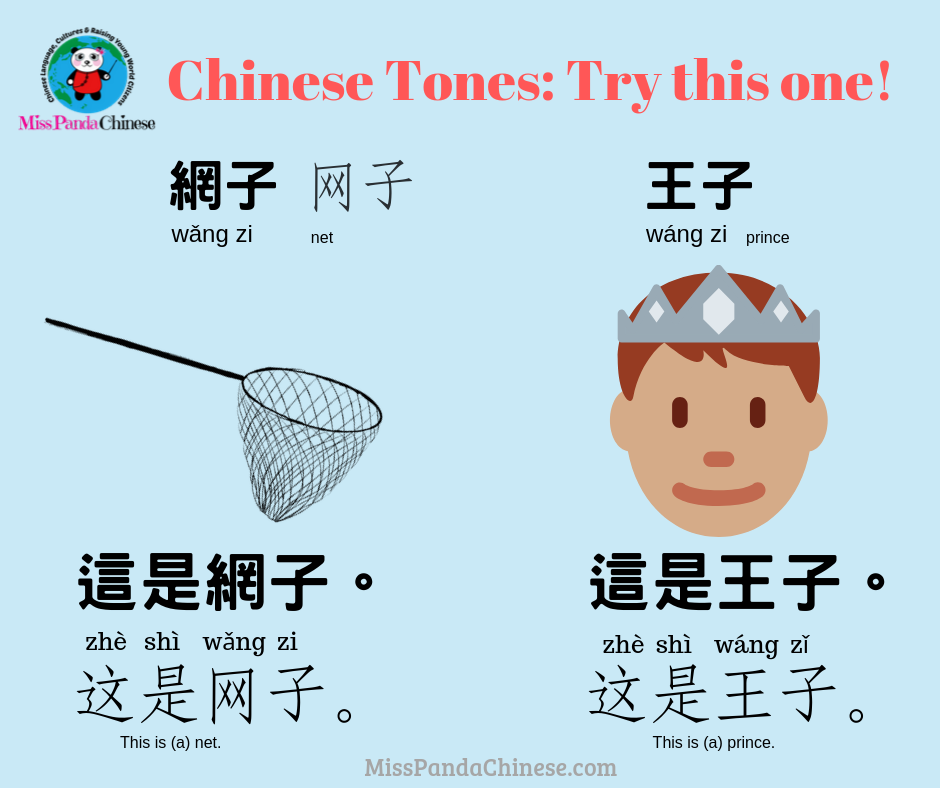
Chinese tones practice net or prince! These are two fun expressions with three high-frequency Chinese characters. When you are learning Mandarin Chinese tones often become a focus. “Am I saying the right tone?” “Do I say it right?” It is important to relax and acknowledge that tones might be something new but you can learn with practice. The best way to practice is to listen to the accurate and clear pronunciation of a native speaker or her
Read more →Chinese tones practice rain or fish. We are looking at two commonly used Chinese words and we have them in two sentences. Children enjoy listening to songs. When they hear songs they hear intonation. Mandarin is a tonal language like many Asian languages. If you sing you have experience with tones. So, the more you and your child listen to songs, sentences, and stories the better you are familiar with tones in Mandarin. Listen and listen more.
Read more →Chinese tones practice mom or horse. We are going to look at two important Chinese words and we are going to hear them in two sentences. Young children listen to words and sentences without the disposition of tones. They hear a sentence and they say it. Sometimes it might be slightly different from what I say but with consistent input children “correct” themselves without any assistance. This shows that if they consistently hear clear, correct, and native-like
Read more →Chinese Tones dumplings or sleep? This sounds like a funny question. But, in Chinese, it is a fun sentence to practice the tones. Mandarin Chinese is a tonal language. There are 4 tones plus a light tone. There are many languages, some call them dialects, in China. They all have tones. Mandarin Chinese is the official language in China and Taiwan. When you visit Canton province in China you will hear people speak Cantonese and Mandarin. If
Read more →